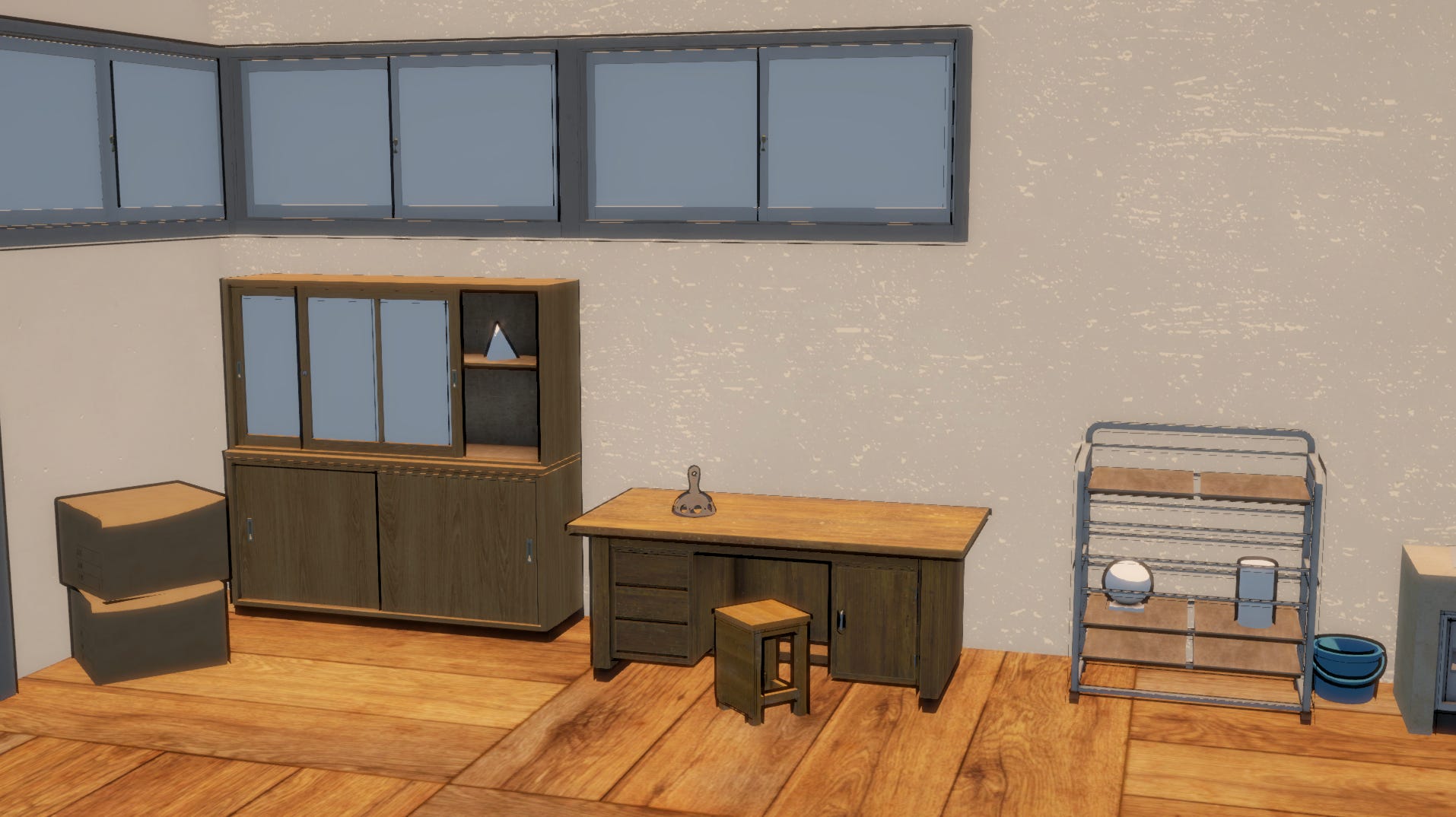
Cross-mending v1
Devlog #2

Despite being very hard at work making a different game (for my job), I’ve still had some time to work on the artifact game this week and I’m happy to say that I got the basic cross-mending mechanic working. Cross-mending is the process of piecing broken pieces of pottery back together. This is the first (and pretty much only) actual mechanic I’ve come up with for this game so far, but I’m pretty sure going to be a core part of the gameplay loop so it’s important to get it right.
Potsherds
One of the first steps of my archeological research journey started at the closest bookstore to my house, Leaves, in Greenpoint. Very soon after the idea for this game spawned in my head, I went to this bookstore and bought the first book I could find that had any relation to artifacts or archeology. I found the book Looking for Dilmun which is about an archaeologist’s journey to discover evidence of a major ancient society on the island of Bahrain.
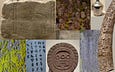
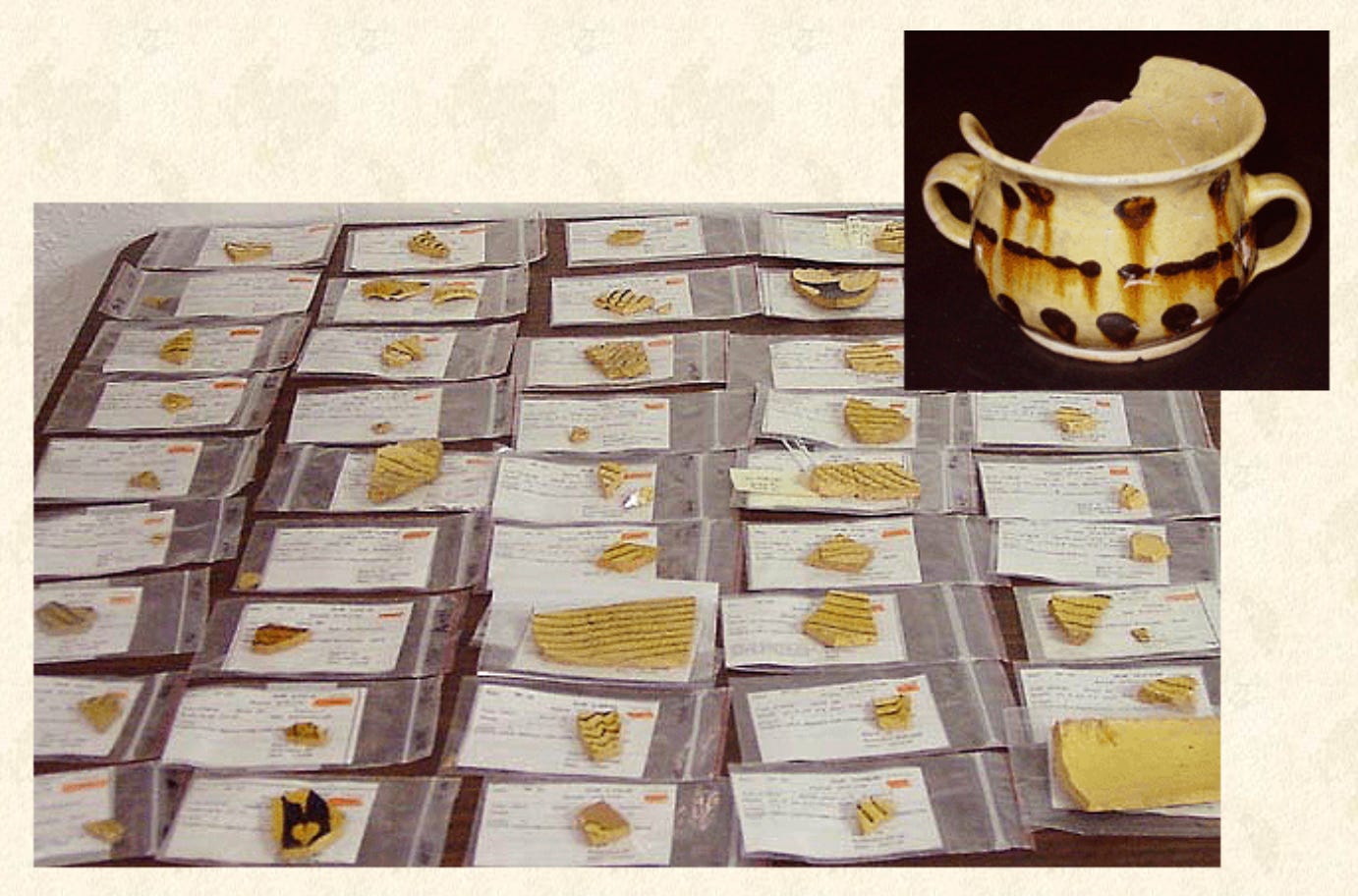
I’m still slowly reading it, but the biggest takeaway I’ve learned so far is about the importance of POTSHERDS. Archeologists are obsessed with these little sherds (yes sherds, not shards). Potsherds (pieces of broken pots, ceramics, vessels, etc) are extremely important in finding out who lived somewhere, where they came from, what they did, how they lived, and so on. So for example, if you know what one culture’s pottery looked like and you find their potsherds in another part of the world, then you know there was some sort of exchange between those two cultures.
For a while, I had this idea for an archeology detective whatever game but I didn’t have any actual game mechanic ideas yet. So when I learned about POTSHERDS I was stoked. There is the obvious puzzle mechanic (piecing things together) that can be used to solve a bigger puzzle (piecing societal relationships together, learning about how people lived). Given that potsherds are a major baseline tool for archeologists, I want them to serve a similar purpose in my game. They won’t be the only mechanic, but they will be a reliable tool that players can come back to when they’re stuck or when they need to get a general, broad snapshot of a society.
Prototype
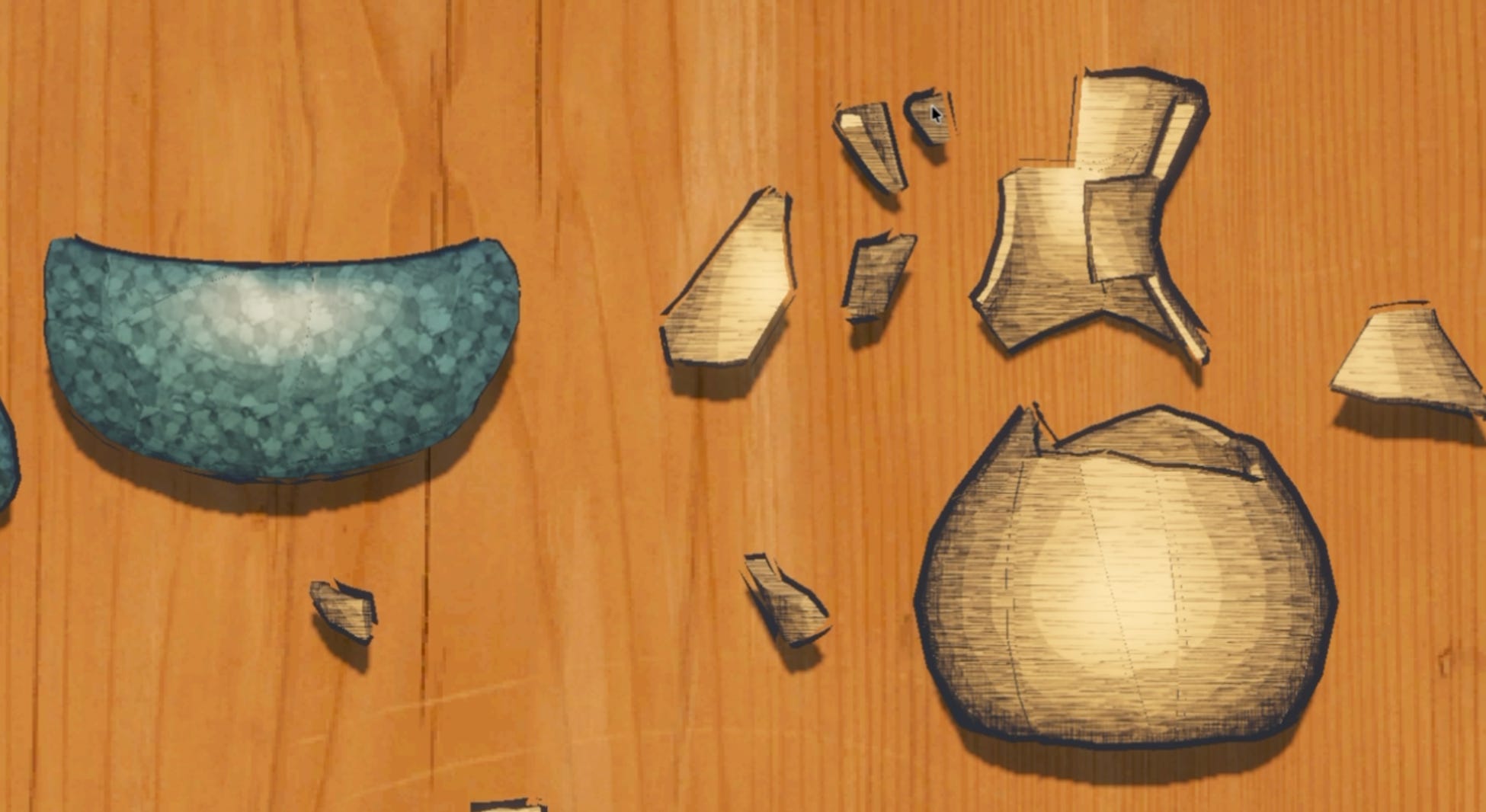
The mechanic isn’t far along, but the bones are there.
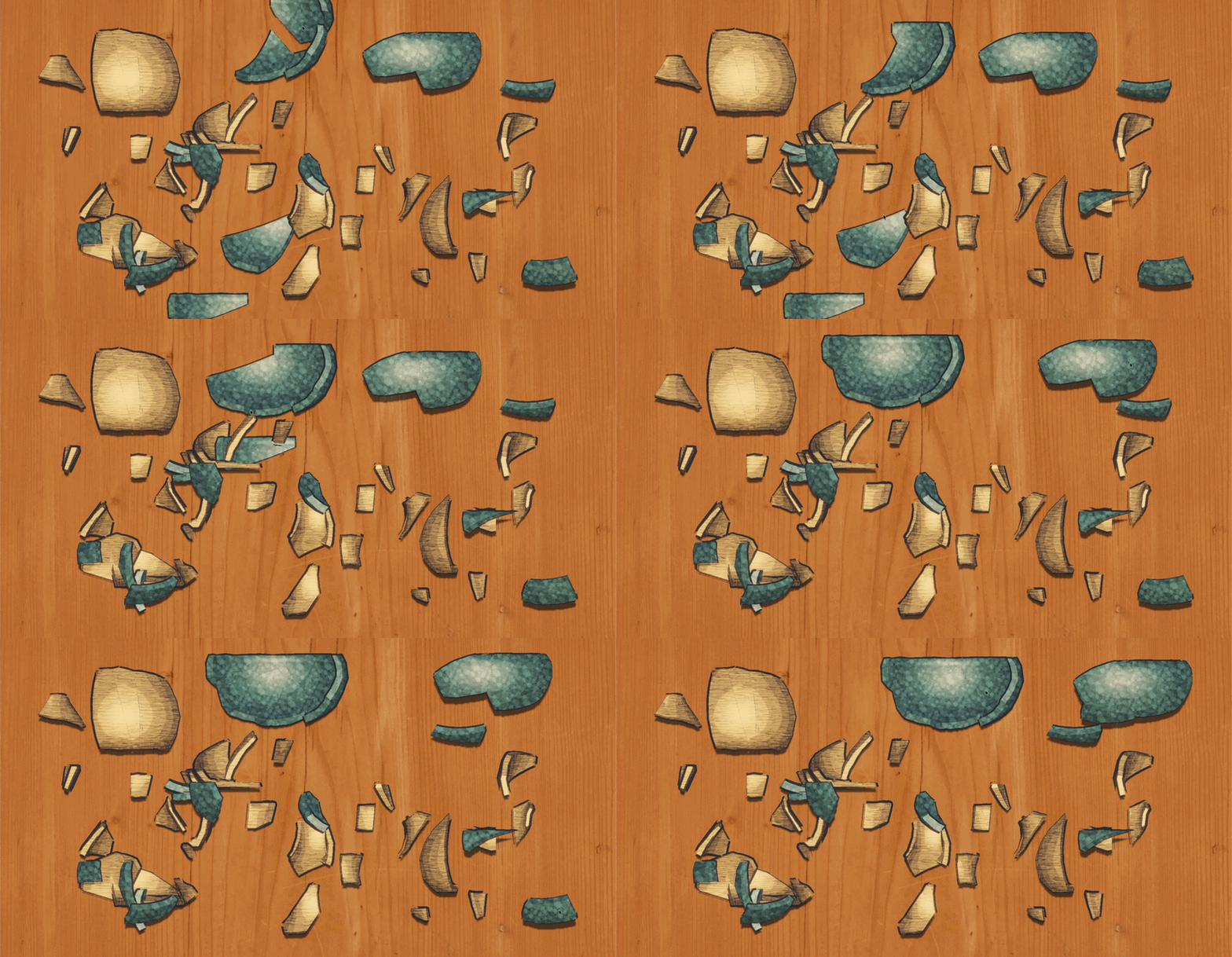
I wanted to be able to assemble group of sherds together separately, then combine into larger groups - like working on a huge 1000 piece puzzle where you kinda group pieces together then eventually start connecting those groups.
The sherds will be all mixed up. In my mind you’ll have all the sherds from one site all together, you’ll sort and organize them, then start piecing them together. So the system lets you work in parts, assemble half a pot on over here, assemble half a pot over there, then snap em together. In practice, the mechanic ended up turning out very satisfying and somewhat meditative.
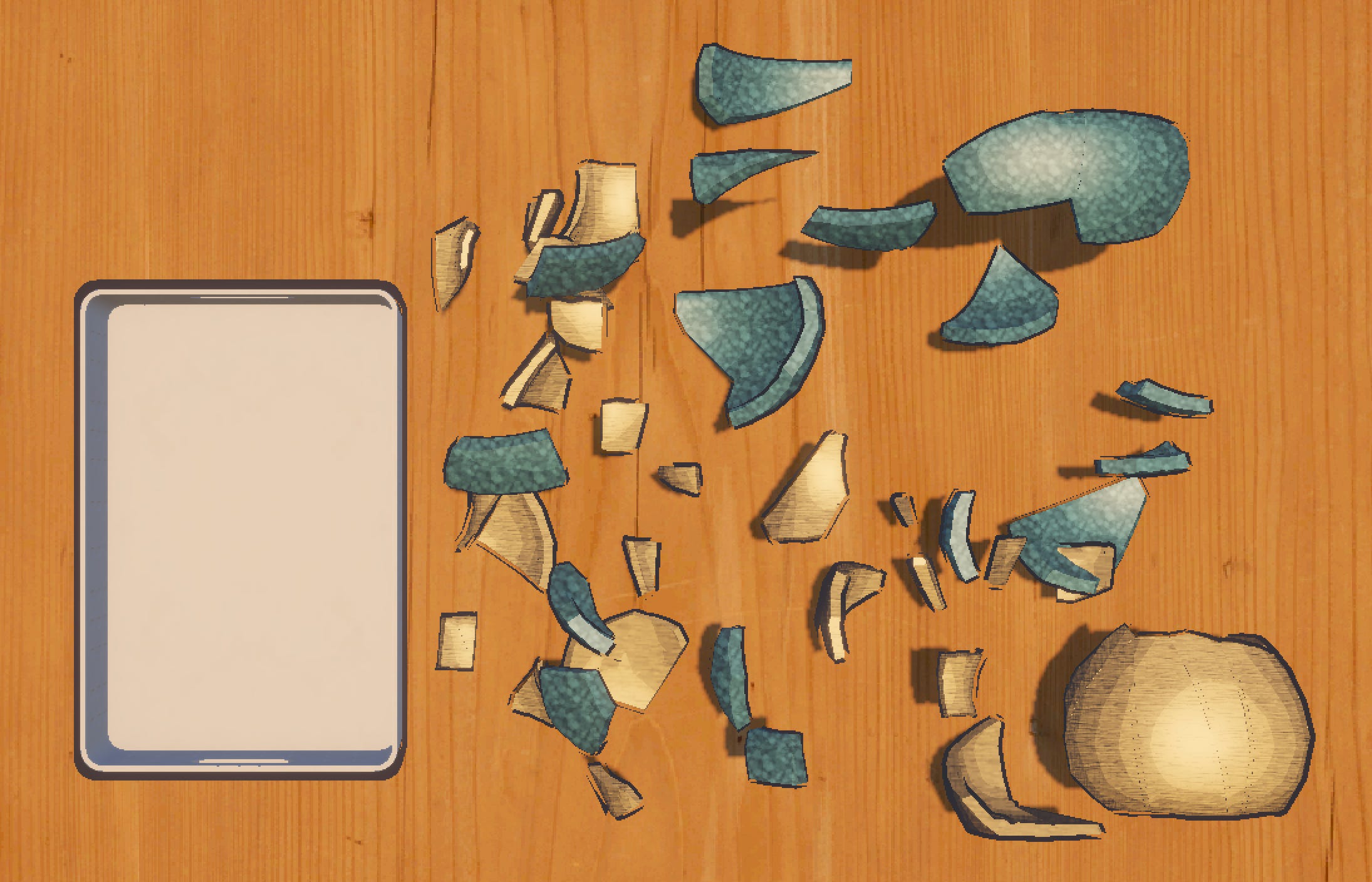
Here’s the technical overview: I’m making the models in blender and using cell fracturing to break them apart (via a plugin). Once the broken up model are in Unity, each Sherd has a script on it that tracks its position relative to its neighboring sherds. Then at runtime, the pots basically explode and all then sherd positions get randomized. When a sherd’s edge is close to it’s original neighbor’s edge, it snaps into place using the initial recorded relative position. The two sherds get parented together under a Sherd Group object so that they move together. When a grouped sherd meets another neighbor, it snaps to the neighbor and the Sherd Groups combine.
Next Steps
I’m starting to see that the workstation where you assemble sherds will be where most of the gameplay takes place. I want to add functions for sorting sherds, add bins to organize sherds, and tags that you can put on sherds and artifacts to categorize them and take notes. Prototyping this mechanic really kicked off a lot of ideas in my head, so I’m excited to keep exploring. So next step is upgrading this work station ~~ see you soon !